

Explore Shibati: What to Do, Eat & Nearby Attractions
The iconic stone steps, once the daily route home for generations of Chongqing residents.
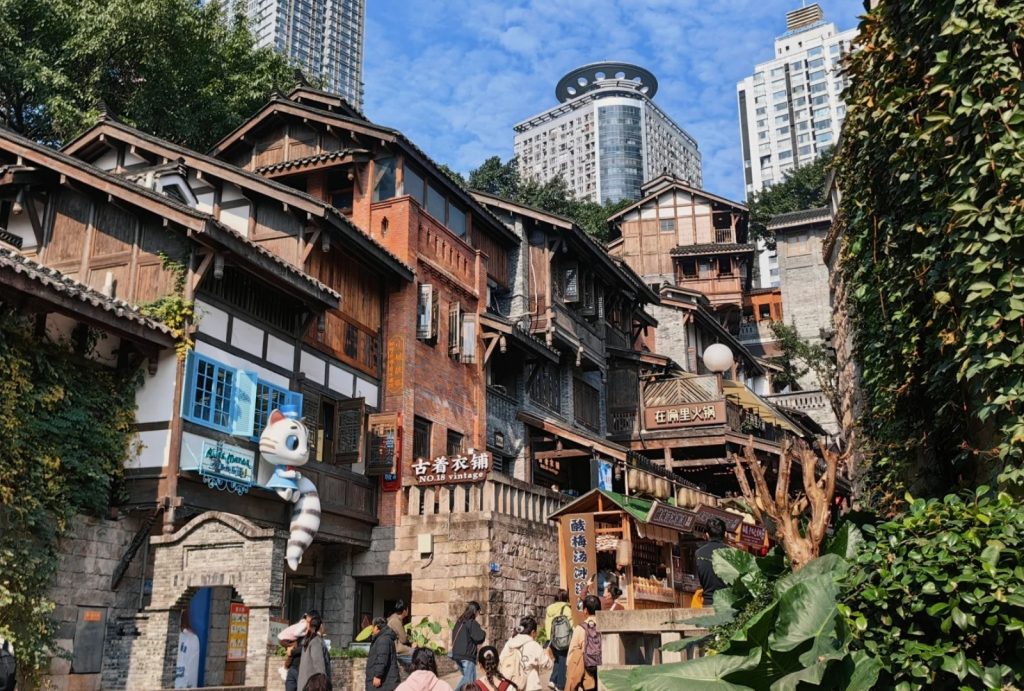
Nestled on the steep slopes of the Yuzhong District, Shibati (十八梯) is a premier cultural landmark that preserves the traditional “Stilt House” architecture and the authentic lifestyle of old Chongqing.
Essential Information for Exploring Shibati
To assist with your itinerary planning, here are the key logistical details for visiting Shibati Old Street:
| Category | Details |
| Address | No. 1 Zhongxing Road, Yuzhong District, Chongqing (重庆市渝中区中兴路1号) |
| Entry Fee | Free Admission |
| Opening Hours | 24 Hours (Lights usually dim after 22:30) |
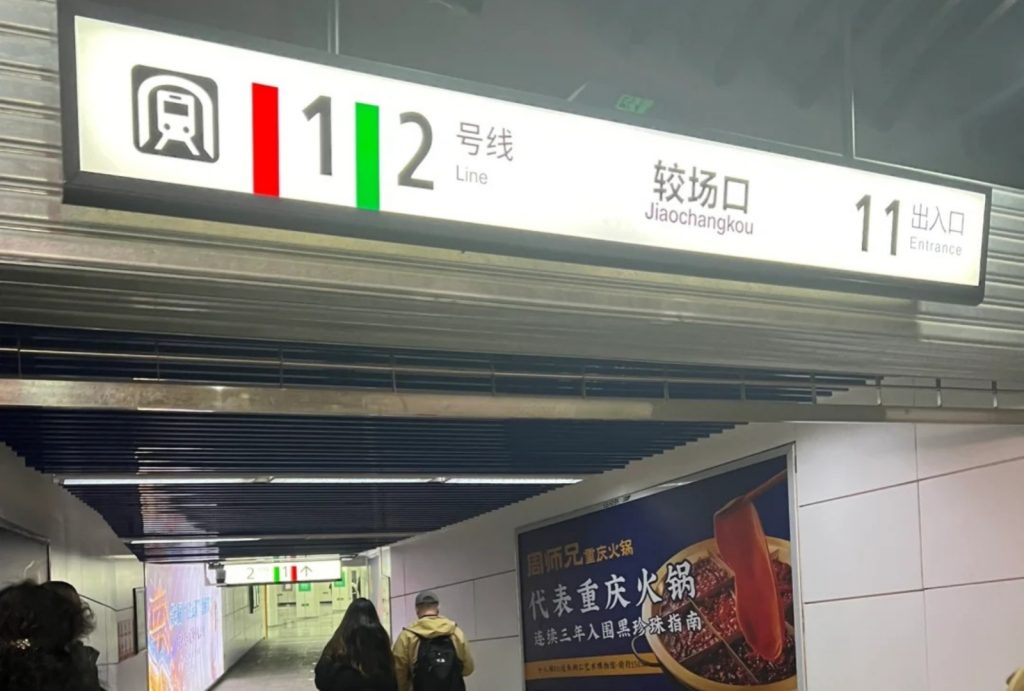
| Transportation | Metro Line 1 or 2 to Jiaochangkou Station (Exit 3 is closest to the upper entrance). |
The “8D” Gateway: Why Shibati is a Must-Visit
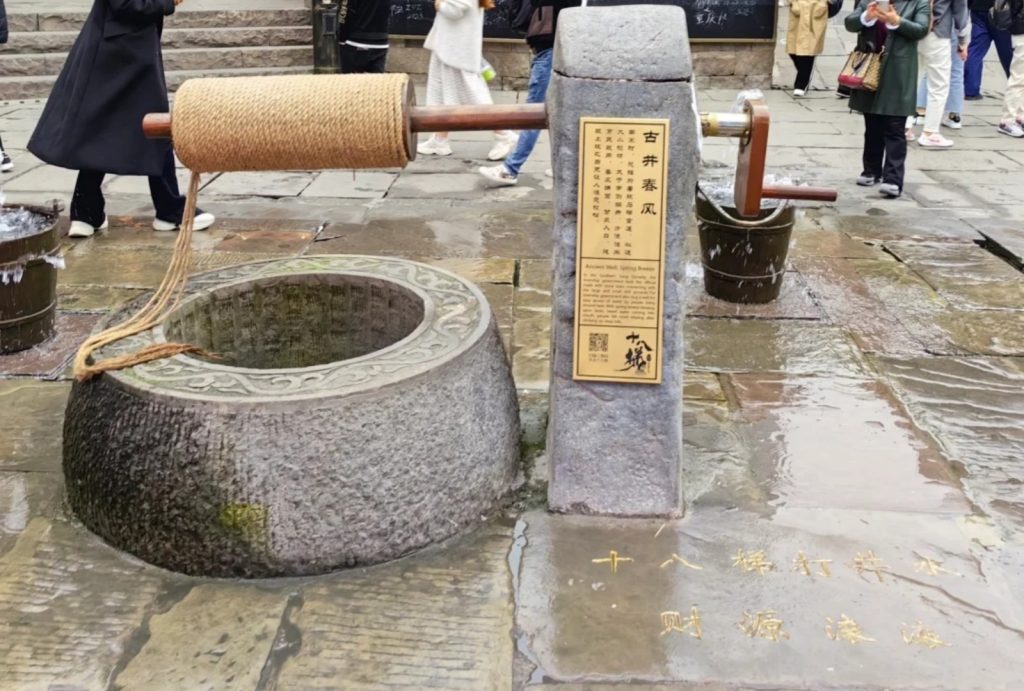
If Jiefangbei represents modern ambition, Shibati anchors Chongqing’s resilient past. Named after a Ming Dynasty well, this historic stone artery once connected the commercial ‘Upper City’ to the riverside ‘Lower City.’ Today, it stands as a revitalized cultural district, offering a dramatic visual contrast where traditional stilt houses sit nestled directly beneath futuristic skyscrapers.
How to Get to Shibati from Downtown:
Due to Chongqing’s complex terrain, getting to the right entrance is key.
Option1 🚗 Private Transfer (Highly Recommended)
- Enjoy precise, door-to-door service to either the Upper or Lower entrance according to your preference, ensuring a completely stress-free start to your visit.
Option2 🚇 By Metro (Highly Recommended)
- Take Line 1 or Line 2 to Jiaochangkou Station (较场口站). Use Exit 3 or Exit 11. From there, it is a 3-minute walk to the main upper gate.
❗If you choose the “top-down” walking route, the nearest metro station is at the upper entrance. Upon reaching the bottom, you will need to walk back up the stairs to return to the metro.
Option3 🚕 By Taxi/Ride-Hailing
- Set your destination to “Shibati Traditional Culture District – North Entrance” (十八梯传统风貌区-北入口).
Option4 🚶 On foot
- If you are staying in the Jiefangbei CBD, Shibati is a pleasant 10-minute walk from the Liberation Monument.
📅Best Time to Visit Shibati
Timing is everything when navigating a vertical city. To get the most out of your visit, consider these factors:
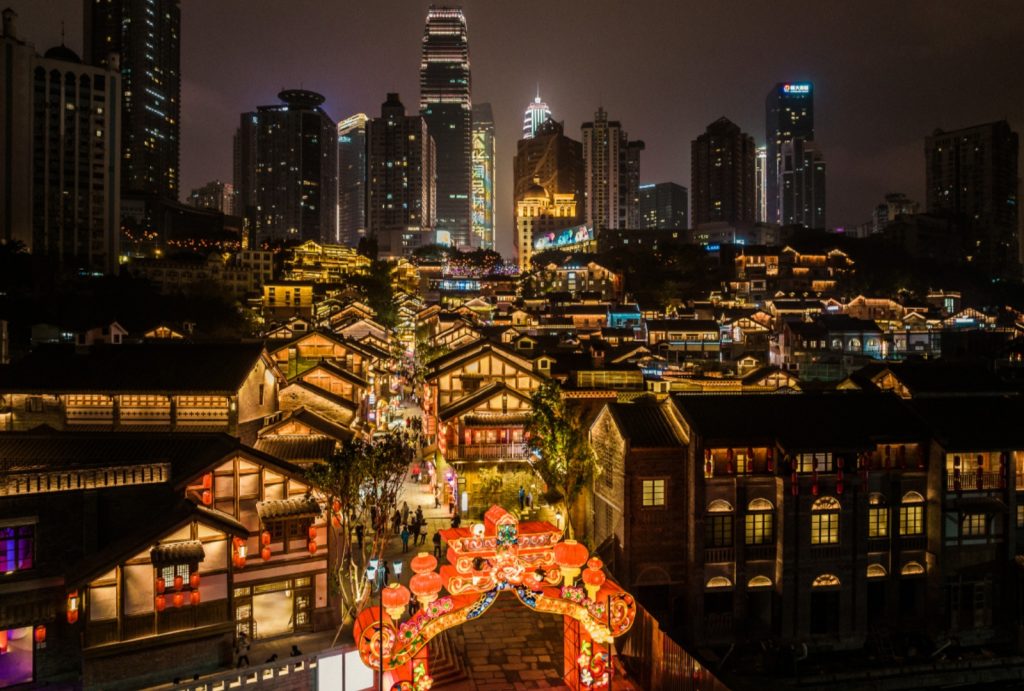
- The Nightscape: At sunset (Around 6:00 PM), thousands of warm-toned lanterns illuminate the stone steps. The atmosphere transforms from a historical site to a glowing, spirited marketplace. This is widely considered the best time for photography.
- Morning Exploration: If you prefer high-clarity photography of the textures of reclaimed brick and stone, 10:00 AM – 12:00 PM offers the best natural light.
- Spring & Autumn: The most comfortable seasons for walking the hundreds of stairs without the humidity.
💡 Pro Tip: Visit on weekdays to avoid the heavy weekend crowds.
Explore Shibati Old Street: What to See & Do
Shibati offers a captivating journey through Chongqing’s multi-layered identity. It’s an experience best savored on foot, allowing you to discover its numerous facets.
1. Strolling along the main staircase and side alleys
While the lantern-lined stairway anchors Shibati, its narrow side alleys reveal hidden cafés, historic murals, and glimpses of everyday local life.
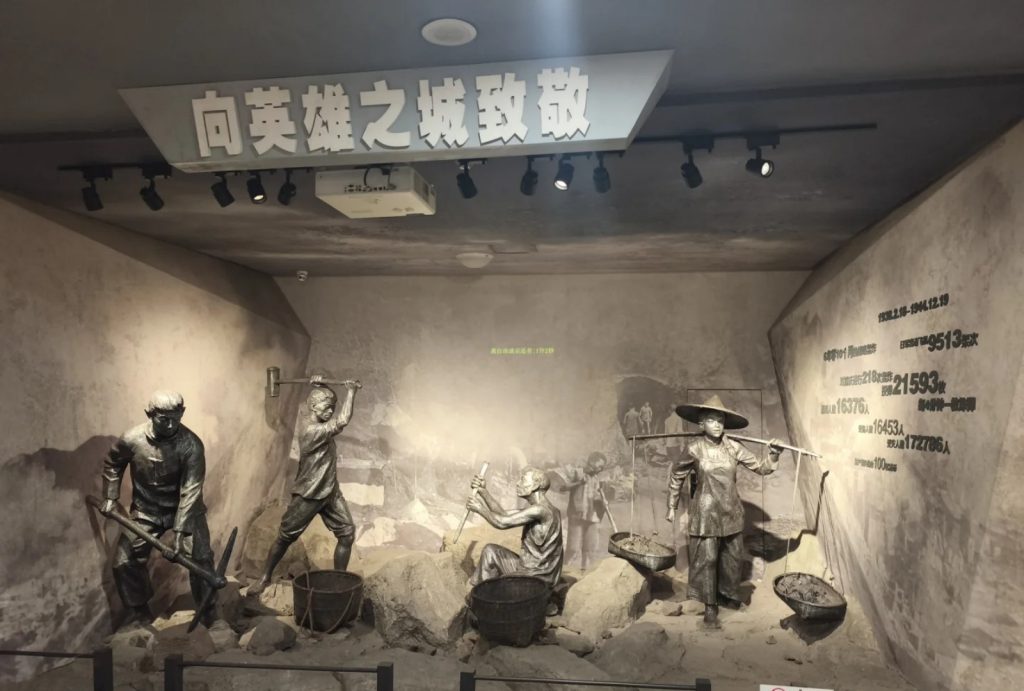
2. The Shibati Tunnel Memorial
Commemorating the 1941 Great Tunnel Disaster, this site reflects Chongqing’s wartime resilience. It speaks volumes about the enduring spirit of the people.
3. Intangible Cultural Heritage
The district is home to numerous workshops demonstrating traditional crafts, from bamboo weaving to local Sichuan Opera. It’s a fantastic spot for families with kids as many places offer interactive sessions where little ones can get creative and learn directly from local masters.
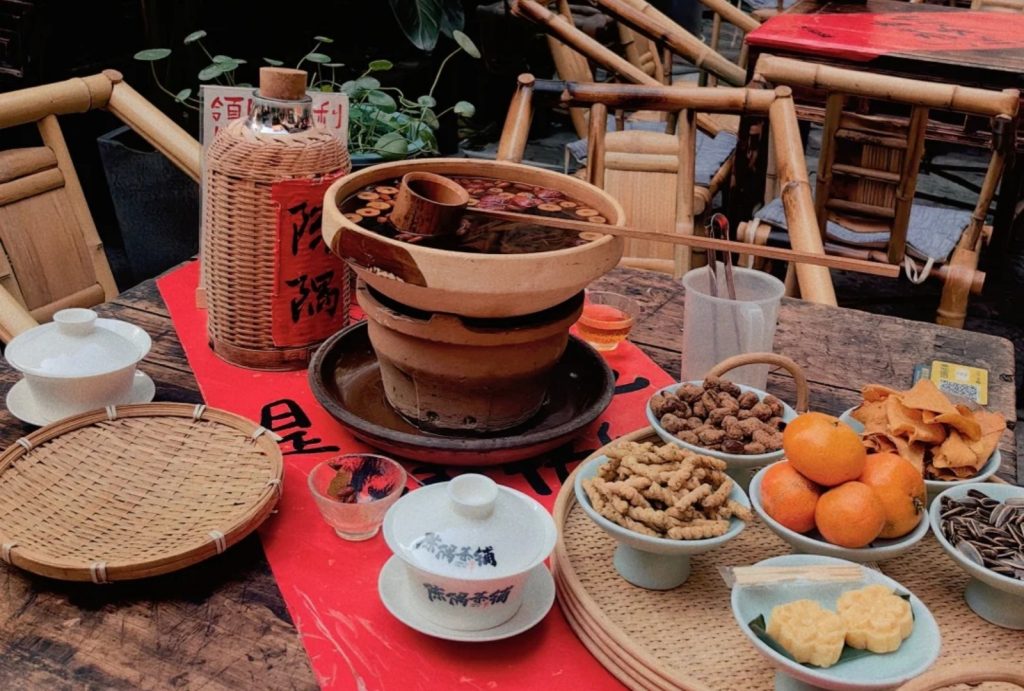
4. Tea House Culture
To experience the local pace of life, visit one of the hillside tea houses. Sitting on a bamboo chair with a cup of Gaiwan tea allows travelers to observe the “Mountain City” lifestyle as it has existed for generations.
Explore Shibati: What to Eat
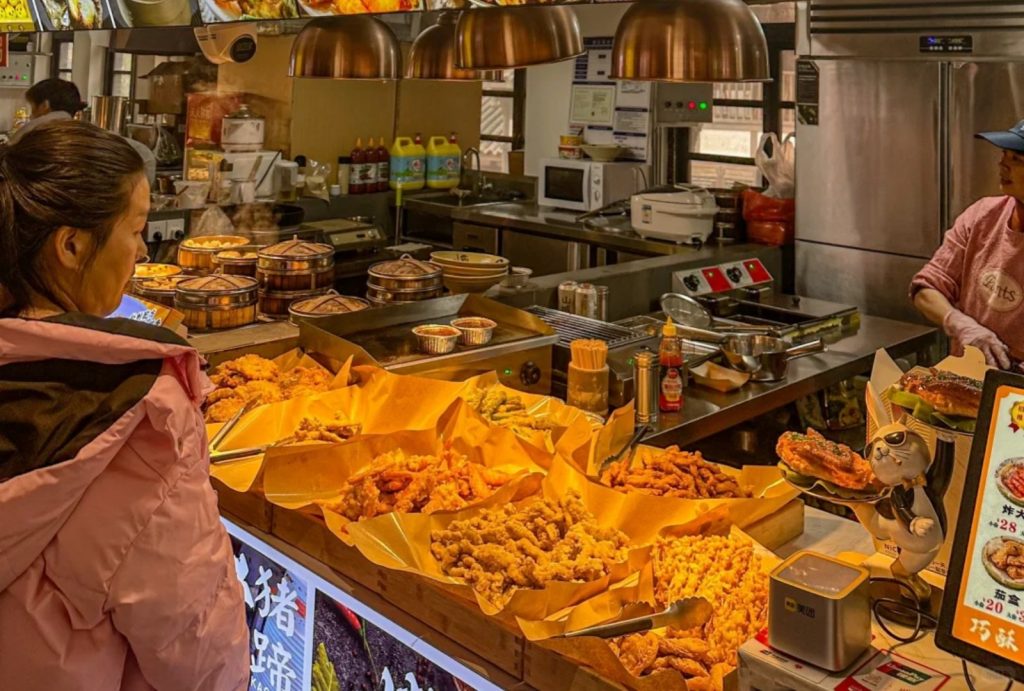
While not a full food street, Shibati offers classic Chongqing snacks such as spicy noodles, rice cakes, and local sweets. Here is what you should look for as you wander the stone steps:
- Hot and Sour Rice Noodles (酸辣粉)—These chewy sweet potato noodles are served in a bold broth of aged vinegar, chili oil, and mouth-numbing Sichuan peppercorns.

- Crispy Pork (Xiao Su Rou 小酥肉)—The contrast between the crunchy exterior and the tender. It’s the perfect “walking snack” to munch on while descending the steps.
- Iced Tofu Pudding (Bing Dou Hua 冰豆花)—A silky, chilled dessert topped with brown sugar. It is the essential “fire extinguisher” after a bowl of spicy noodles.

Nearby Attractions: Expanding Your Journey
Shibati is centrally located, making it easy to visit these spots on foot or by short taxi ride:
- Jiefangbei Pedestrian Street (解放碑步行街): Just a 10-minute uphill walk leads to Jiefangbei, Chongqing’s premier shopping and commercial hub—often described as the city’s Times Square.

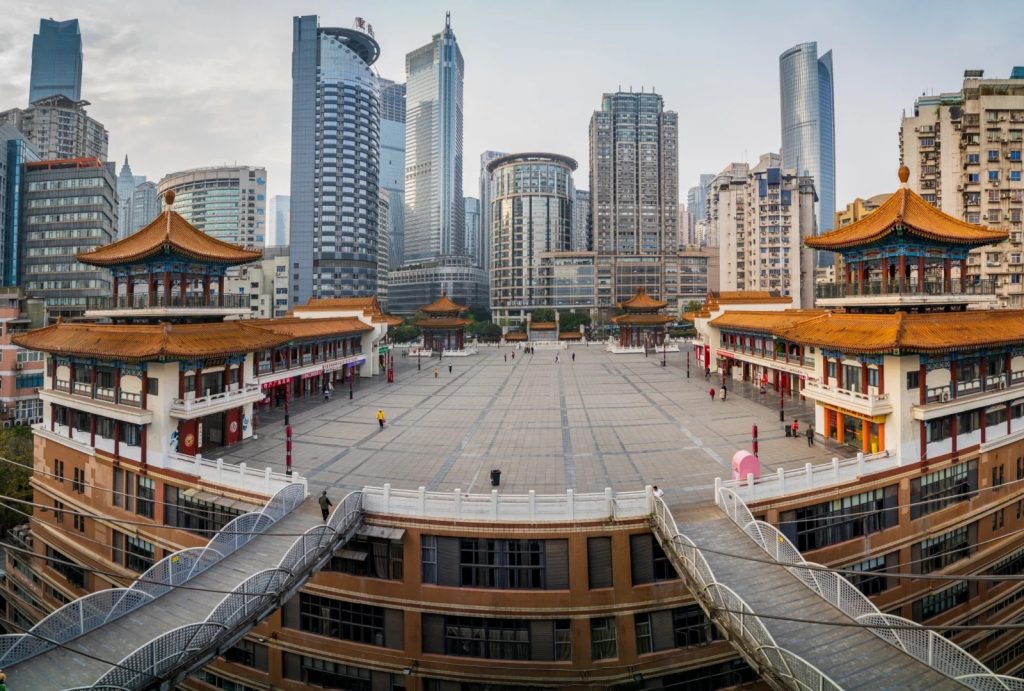
- Kuixing Pavilion (魁星楼): Located near Jiefangbei, famous for the “1st floor or 22nd floor?” geographical wonder where a plaza sits atop a skyscraper.
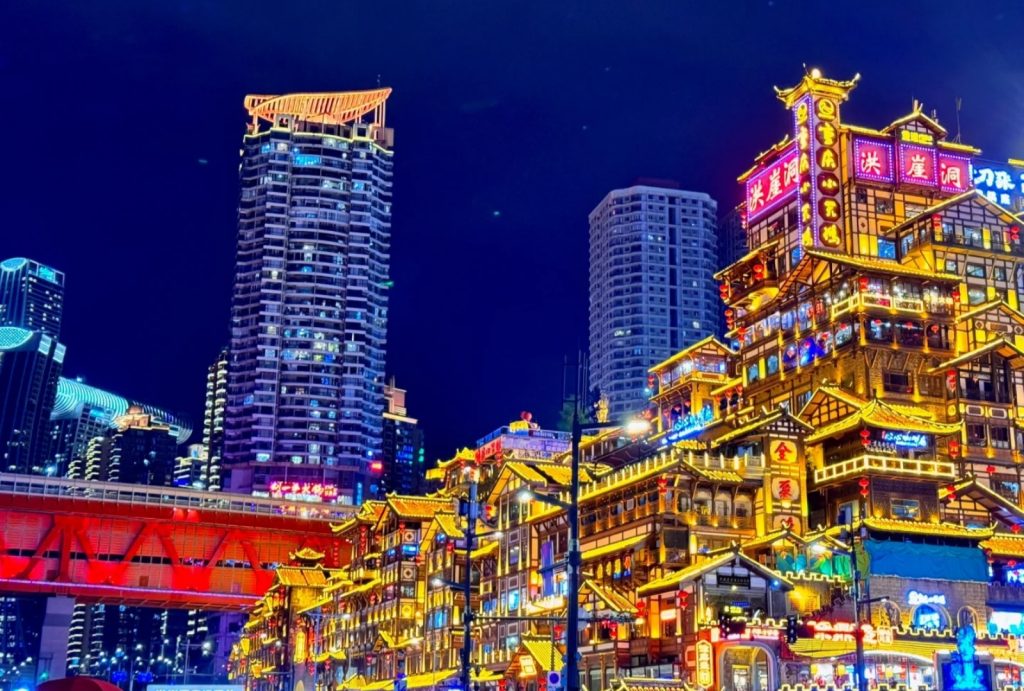
- Hongya Cave (洪崖洞): A 15-minute walk or a quick cab ride. We recommend visiting Shibati first, then heading to Hongya Cave for the late-night river view.
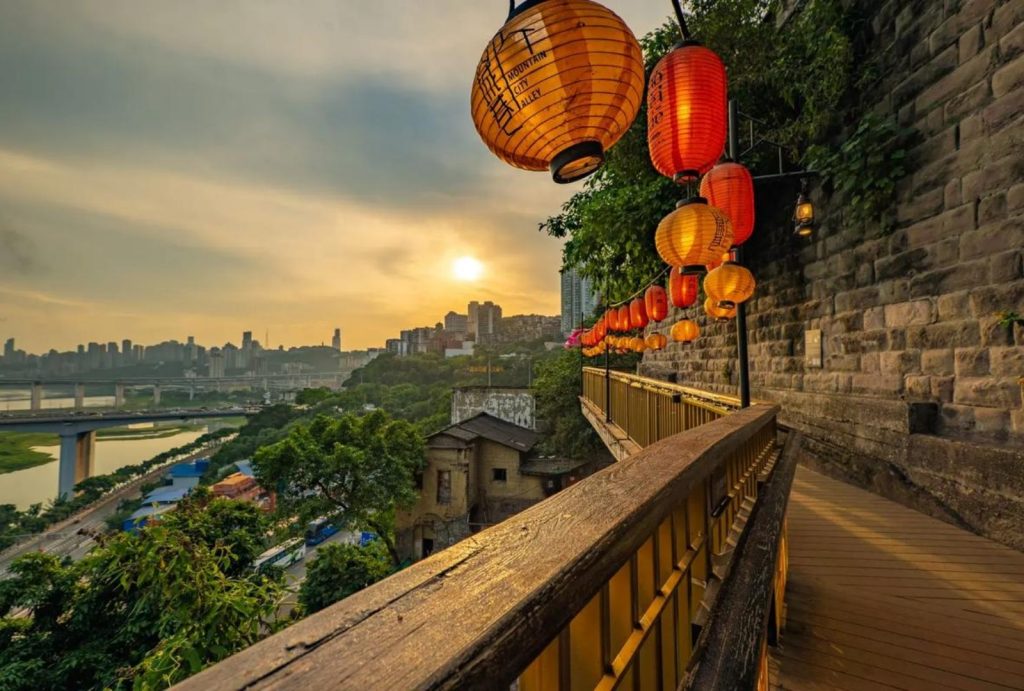
- Mountain City Trail (山城步道): Another historic pathway offering picturesque views and traditional architecture.
💡 Insider Travel Tips for a Smooth Visit
- Step-Proof Footwear is Essential: You will be navigating over 200 uneven stone steps. Leave the flip-flops or heels at your hotel; sturdy sneakers or walking shoes are a must to avoid fatigue and slips.
- Navigating the 3D Terrain: GPS and Google Maps may be unreliable in Chongqing’s vertical environment (it might tell you you’re on the street when you’re actually 10 floors above it). Follow physical landmarks or look for directional signs.
- Payment & Connectivity: While Shibati is a modern scenic area, some small heritage craft stalls may prefer Alipay or WeChat Pay. Ensure your international card is linked to your e-wallet before arriving.
More than just a staircase, Shibati is where Chongqing’s past meets its soaring future. Whether you’re drawn by the aroma of Suanlafen or the glow of evening lanterns, it offers a rare glimpse into the “Mountain City’s” soul.
❓ People Also Ask
Can I visit Shibati and Hongya Cave on the same day?
Yes! They are both in the Yuzhong District. You can start at Shibati in the late afternoon, walk through Jiefangbei, and reach Hongya Cave by evening. They are about a 20-minute walk (or a 5-minute taxi ride) apart.
Are there public restrooms in Shibati?
Yes, there are several modern, clean public restrooms located throughout the cultural district. Remember to bring your own toilet paper.
How many steps are there actually in Shibati?
There are actually over 200 individual stone steps winding through the various platforms. The “Eighteen” refers to the eighteen original platforms or levels that existed in the Ming Dynasty, rather than the literal count of stairs.